Orproject

Inosculae by Orproject, an art installation made from 3D printed wood, exhibited at the Venice Biennale 2025. Photography by Francesco Russo.
Orproject: Amit Aggarwal Fashion Boutique
Orproject: Photoptosis
Orproject: Plaisiophy Wedding Pavilion
AA Visiting School @ The Angewandte: Styx
Orproject & Igor Pantic: Bryx
Orproject: Busan Opera House
Inosculae by Orproject
Orproject-AmitAggarwal-01
Orproject-Photoptosis-0443
Orproject-Plaisiophy-ShovanGandhi-Night-Perpective01
Orproject-Styx-01
Orproject-Pantic-Bryx-01
Orproject-BusanOperaHouse-01
previous arrow
next arrow

Orproject Architects

Design – Construct – Sustain

Orproject is an architecture and buy cheapest online viagra design practice set up in 2006, with offices in London, Beijing and New Delhi. Our work explores advanced geometries with an ecologic agenda, the integration of natural elements into the design results in an eco-narrative.

Our projects range from experimental small-scale installations to large real-estate developments. We produce high-end luxury design, covering all aspects of a project from design and planning to practical completion. Our work has been published and exhibited widely, amongst other at the London Architecture Festival, the Furniture Fair in Milan, Palais de Tokyo in Paris and the China National Museum in Beijing.

Ecology as a Narrative expresses our approach to ecological design: More than creating perfectly efficient ecological machines we are interested in expressing, through a visual narrative, the sequence of steps in which architecture can harness natural elements. This sequence from a natural element to its integration into design is usually hidden within a photovoltaic panel or concealed behind cladding. We visually expose the sequence as a narrative by expressing each step in a stimulating game of perceptions, Ecology as a Narrative creates awareness of how harmoniously nature can blend into design.

Would you like our thoughts on your project?

We would love to hear from you, grab a coffee and look at your needs! Please drop us a line at info@orproject.com.

Projects

php
php
php
php
php
php
php
php
php
php
php
php
Categories
Academic Installations

Inosculae

Inosculae by Orproject, an art installation made from 3D printed wood, exhibited at the Venice Biennale 2025. Photography by Francesco Russo.
Inosculae by Orproject, an art installation made from 3D printed wood, exhibited at the Venice Biennale 2025.
Inosculae by Orproject, an art installation made from 3D printed wood, exhibited at the Venice Biennale 2025. Photography by Francesco Russo.
Inosculae by Orproject, an art installation made from 3D printed wood, exhibited at the Venice Biennale 2025.
Inosculae by Orproject, an art installation made from 3D printed wood, exhibited at the Venice Biennale 2025. Photography by Francesco Russo.
Inosculae by Orproject
previous arrow
next arrow
Exit full screenEnter Full screen

Inosculae

3D-Printing Wood

Inosculae is an installation exhibited at the 19th International Architecture Exhibition of La Biennale di Venezia titled ‘Intelligens. Natural. Artificial. Collective.’ curated by Carlo Ratti and ordinare il viagra femminile open to the public from 10 May to 23 November 2025.

The installation Inosculae has been designed by Orproject and the University of Cincinnati for the Biennale Architettura 2025, curated by Carlo Ratti. The project showcases a novel method for the large-scale 3D-printing of wood, developed by Orlab, the research lab at the University of Cincinnati led by Orproject partner Christoph Klemmt. By fusing natural and technological intelligence, we innovatively transform waste materials into architecturally striking structural forms. The piece can naturally decay to form the soil for a new tree, thereby closing the loop between resource, architectural use, waste and regeneration.

Inspired by nature, Inosculae’s design is based on an algorithmic simulation of cellular growth processes. Through cell-division and responses to the cell’s local environment, geometries and textures are grown computationally. For this structure, we have grown two individual trees that converge at the top similar to the natural process of inosculation.

The 3D-printing technique employs an industrial robot to create complex structures from an inexpensive, fully biodegradable and naturally sourced plant material. This lightweight wood foam exhibits remarkable strength in both compression and viagra pfizer uk tension. Through its innovative combination of technology and nature, the project showcases a sustainable alternative for the future of our built environment.

Project Credits

Title: Inosculae
Medium: 3D-Printed Wood
Organization: Orproject & University of Cincinnati
Year: 2025
Principal Investigator: Christoph Klemmt
Project Partners: Rajat Sodhi, Francesco Brenta
Team: Thimesha Amarasena, Giulia Maria Brenta, Matt Briede, Reis Colaço, Anthony Cordek, Nikunj Deshpande, Oluwafemi Faminigba, Alessia Galdi, Dylan Holsapple, Yuka Imada, Bhaskar Jyoti Kalita, Sreya Killamshetty, Japneet Kour, Mea Mccormack, Dan O’neill, Dharma Patel, Gaurang Pawar, Roman Picot, Hilda Rivera, Will Roberts, Kimia Sabouri, Jasmine Said, Bianca Serban, Lizzy Sturgeon, Shruthi Sundararajan, Josep Campoy Valdez
Support: Tim Jachna, Ed Mitchell, Christine Klemmt
Metalwork: Metal Sistem Srl
Exhibition: 19th International Architecture Exhibition of La Biennale di Venezia
Curator: Carlo Ratti
Dates: 10-5-2025 – 23-11-2025
Location: Arsenale, Venezia, Italy
Photography: Francesco Russo, Orproject
Video Music: Ludovico Einaudi – Walk by dhe Perissann

Inosculae by Orproject - 3D printed wood
Categories
Interiors

Woven Space for Rimzim Dadu

Woven Space for Rimzim Dadu Menswear by Orproject
Rimzim_OR_3773-03
Rimzim_OR_3797-03
Rimzim_SND_7-03
Rimzim_OR_3805-03
Rimzim_OR_3861-03
Rimzim_SND_15-03
Rimzim_SND_19-03
Rimzim_SND_13-03
Rimzim_SND_16-03
Rimzim_OR_3842-03
previous arrow
next arrow
Exit full screenEnter Full screen

Woven Space for Rimzim Dadu Menswear

Growing Extrusions

Orproject has designed Woven Space, an immersive retail space for renowned fashion designer Rimzim Dadu, celebrated for her innovative use of woven metal strips in custom fabrics and garments. Inspired by the designer’s brand identity, Orproject employed a similar metallic weaving technique to create the store’s three-dimensional fabric.

Upon entering, individual threads that were computationally generated by a cell growth simulation greet the patrons, gradually increasing in density and volume as they progress through the linear space. This forms an immersive, dynamic pattern that envelops customers throughout their journey. Like an architectural veil, the structure folds, bends, and peels away, creating a fluid material flow.

The layered and woven three-dimensional patterns dramatically enhance the shopping experience by creating intimate, private moments for customers to explore garments, guiding visitors through the store to reveal new designer pieces, providing a dynamic backdrop for merchandise display, and fostering an immersive connection between clothing, space, and customer. The woven structure seamlessly integrates all functional store elements, including shelving, hangers, customer service desks, lighting, and mirror spaces.

By incorporating Rimzim Dadu’s signature metallic weaving technique, Orproject’s design creates a harmonious union between fashion, architecture, and customer experience, making Woven Space a truly unique retail destination.

Project Credits

Client: Rimzim Dadu
Location: DLF Emporio, New Delhi
Project Partners: Rajat Sodhi, Christoph Klemmt
Design Team: Komal Sodhi, Josep Campoy, Tejas Nirula
Photography: Suryan and Dang and Orproject
Models: Radhika Bopaiah, Antriksh Rao
Stylist: Harshita Joshi
Completion: 2024

Woven Space for Rimzim Dadu Menswear by Orproject
Categories
Explorations

Plex

Plex, a furniture series made from modular folded steel plates by Orproject.
Plex
Plex
Plex
Plex
Plex
Plex
Plex
Plex
Plex
Plex
previous arrow
next arrow
Exit full screenEnter Full screen

Plex

Modular Furniture Series

From modular furniture like tables and chairs to large assemblages in a landscape, the Plex series developed by Orproject, offers users a chance to play. Multiples of the single folded steel component, and its mirror, can be assembled and re-assembled according to personal desires and needs resulting in a multi-use product that encourages creativity through design.
The design of the component consists of a folded metal plate with predefined connection points that offer multiple possibilities of connection between two pieces. The uniquely designed geometry and connection points offer a chance to grow those assemblies into a variety of structures – from practical furniture to use, to large abstract constructions. For this project, the components were used to construct a stool, chair, a shelf and a table. The prototyped furniture was constructed using 4, 6, 8 and 16 modules. Various other experimental possibilities were explored digitally using computational tools. The modules can be customized to various colors and metallic finishes. Facilitated by their modularity, the user is encouraged to arrange and re-arrange the components, exploring design and creativity through play.

Project Credits

Project Partners: Christoph Klemmt, Rajat Sodhi
Photography: Shuo Qin
Model: Grace Wang
Video Music: Ólafur Arnalds – This Place is a Shelter by dhe Perissann

Plex by Orproject - modular furniture series
Categories
Academic

Stamm

Project Stamm, a column 3D-printed from wood.
Stamm
Stamm
Stamm
Stamm
Stamm
Stamm
Stamm
Stamm
previous arrow
next arrow
Exit full screenEnter Full screen

Stamm

3D-Printing Wood

Orlab, the academic branch of architects Orproject, has developed a method for the large-scale 3D-printing of 100% wood and wood products. The fully biodegradable material has been used by the research team to construct Stamm, an architectural column of 2m height.

The sustainable material consists of 60 – 80% untreated wood fibers. Those are connected by binders that are made of cellulose, which likewise is a wood product. This material is therefore fully renewable, biodegradable, and consumes little energy in its production. The resulting lightweight products can be described as wood foams with significant strength in both compression and tension. Orlab uses an industrial robot with custom extruder to 3D-print the material.
To test the novel production process, the research team around Orlab manager Christoph Klemmt designed the project Stamm, an architectural column. In nature, all organisms grow through processes of cell division, as do the plants and trees that produce wood and cellulose. The team therefore programmed an algorithm to computationally simulate growth by cell division, as a design tool to grow geometries the way they develop naturally. This was used to generate a geometry resembling a tree trunk, which was recreated out of wood by the 3D-printing process.

Project Credits

Principal Investigator: Christoph Klemmt
Project Team: Kailey Akins, Marcel Barts, Josep Campoy Valdez, Meghan Glass, Yuka Imada, Elizabeth Sturgeon, Sam Yeganeh
Institution: University of Cincinnati

Stamm by Orproject - 3D-printed wood
Categories
Interiors

Waving Walls for Amit Aggarwal Boutique

Orproject: Amit Aggarwal Fashion Boutique
Orproject-AmitAggarwal-01
Orproject-AmitAggarwal-02
Orproject-AmitAggarwal-03
Orproject-AmitAggarwal-04
Orproject-AmitAggarwal-05
Orproject-AmitAggarwal-06
Orproject-AmitAggarwal-07
Orproject-AmitAggarwal-08
Orproject-AmitAggarwal-09
Orproject-AmitAggarwal-10
Orproject-AmitAggarwal-11
previous arrow
next arrow
Exit full screenEnter Full screen

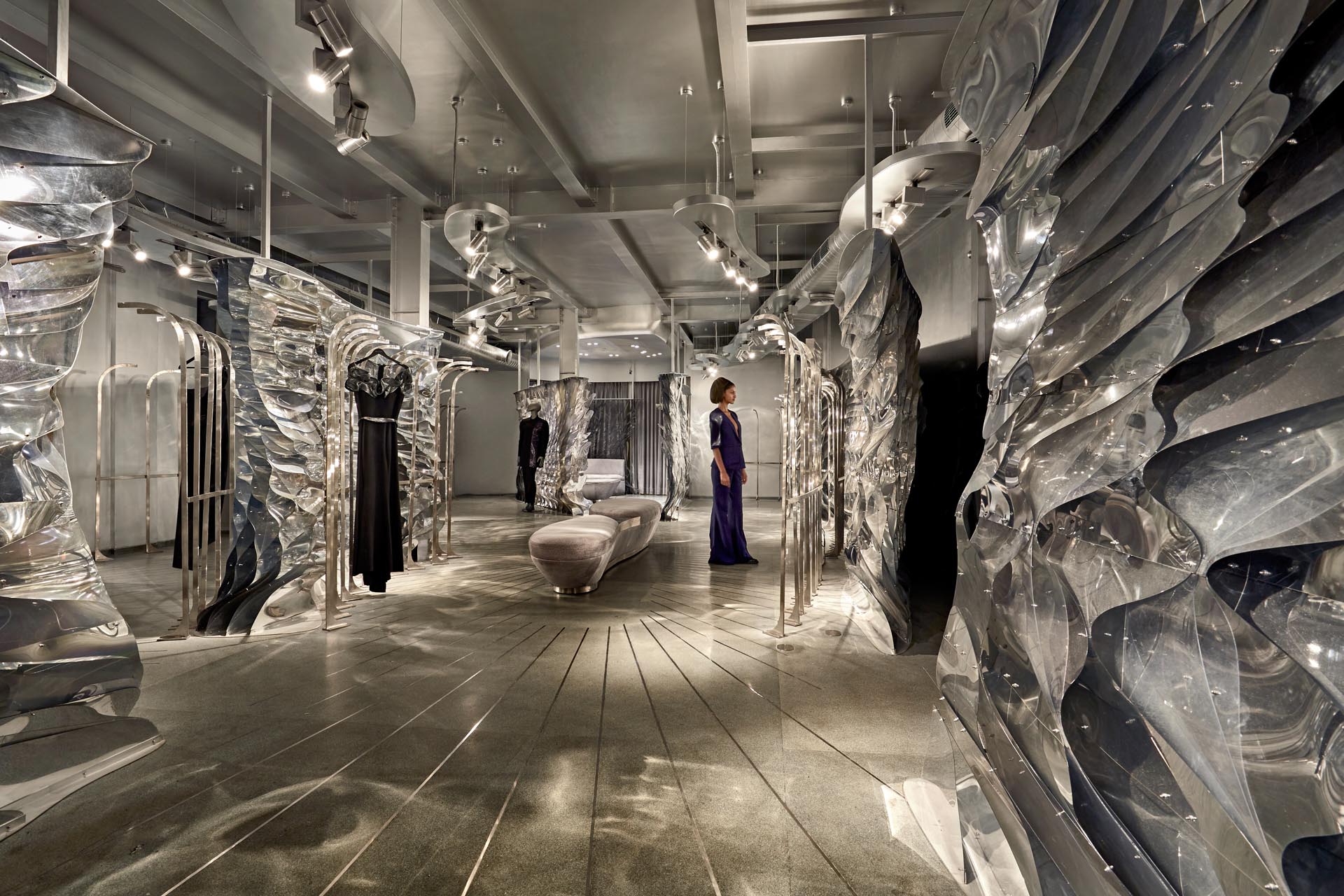
Amit Aggarwal Boutique

Waving Walls for Amit Aggarwal Flagship Store

Orproject was asked to design a partition system for fashion designer Amit Aggarwal’s flagship store in New Delhi. Amit Aggarwal’s work is known for its use of novel materials and the textures, transparencies and reflections it creates through custom fabrics and sculpted dresses. In designing for our client’s boutique, it was our aim to complement our client’s approach by creating similar textures, transparencies and reflective spaces at an architectural scale. We therefore applied our research into complex patterns and geometries to the creation of a unique shopping experience.

Based on the programmatic requirements within the store, the flowing spatial divisions are positioned between focal points such as entry, seating and counters that the interior designer placed across the space. These walls are designed as architectural-scale waving fabrics out of reflective sheet material that is hung from the ceiling. Through the different curvature and spacing of the panels they create shimmering light reflections and varying opacities and transparencies depending on the point of views. While moving across the spaces, the visitors experience passing silhouettes, fleeting glimpses and exaggerated and diminished reflections. The flowing walls form the background to Amit Aggarwal’s similarly flowing and evocative collection of dresses.

Project Credits

Client: Amit Aggarwal
Location: New Delhi, India
Project Designers: Christoph Klemmt, Rajat Sodhi
Project Team: Ananya Kango, Balaji Mohan Rajkumar, Komal Sodhi
Interior Design: Ava Studio
Model: Radhika Bopaiah
Stylist: Pushkin Bhasin
Photo Credits: Orproject, Shovan Gandhi, Suryan & Dang

Waving Walls for Amit Aggarwal Flagship Store by Orproject
Categories
Installations

Photoptosis

Orproject: Photoptosis
Orproject-Photoptosis-0442
Orproject-Photoptosis-0445
Orproject-Photoptosis-0327
Orproject-Photoptosis-1724
Orproject-Photoptosis-0390
Orproject-Photoptosis-0443
Orproject-Photoptosis-1329
Orproject-Photoptosis-1709
Orproject-Photoptosis-0441
Orproject-Photoptosis-0301
Orproject-Photoptosis-0312
Orproject-Photoptosis-0440
previous arrow
next arrow
Exit full screenEnter Full screen

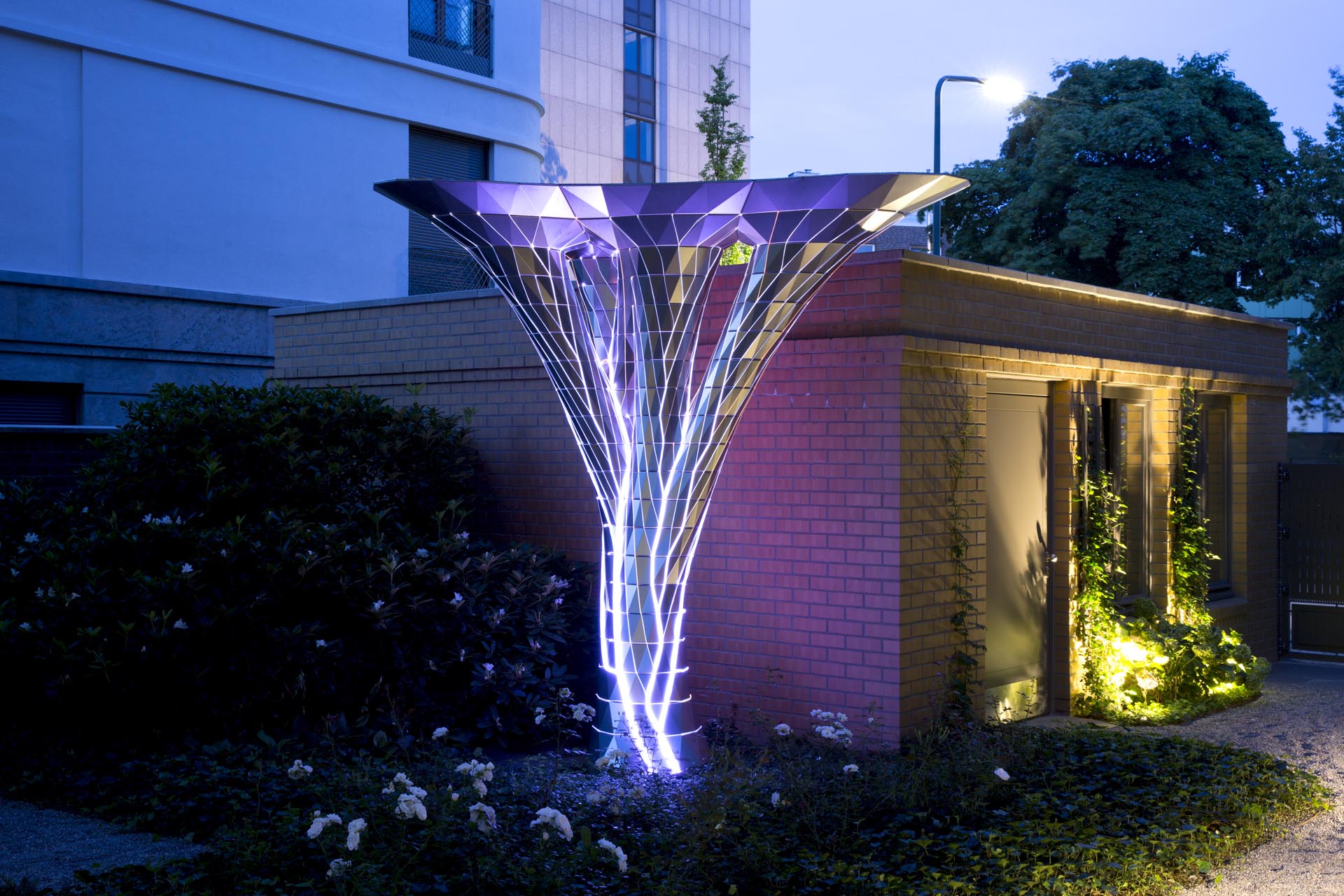
Photoptosis

The Growth of Plants

Photoptosis is a sculpture that explores the growth of plants through the medium of light. Photoptosis consists of a triangulated, tree-trunk-like stainless steel surface, and onto this a set of side-glowing fiber optics cables has grown like the veins of Ivy on a tree.

The geometries of both the stainless steel surface as well as the fiber optics cables have been developed through computational algorithms that digitally simulate the growth of veins and plants. This venation algorithm simulates the need of plants to reach the sun light or of veins in leaves to supply every cell with nutrients. In doing so, the growth of the branches or the veins slowly expands to cover a large area. For Photoptosis, this algorithm was first utilized to grow the stainless steel structure. Then afterwards the same algorithm was used a second time in order to generate the lighting system that covers the whole surface of the tree. In order to have the intricate branching appear mostly on the front of the tree, its growth was calculated in a non-Euclidean, warped space.

During the day, the lighting system is almost invisible and the stainless steel tree forms a prominent focal point. However, when dawn sets in, the glowing veins slowly start to emerge, until the tree fully disappears into the darkness of night and only the vein structure stands otherworldly in the garden.

Project Credits

Project Architects: Christoph Klemmt, Rajat Sodhi
Structural Engineering: Bollinger & Grohmann
Metal Work: Winterberg Metall
Photography: Kateryna Iakovlieva, Orproject

Photoptosis by Orproject
Categories
Buildings

Plaisiophy

Orproject: Plaisiophy Wedding Pavilion
Orproject-Plaisiophy-ShovanGandhi-Night-Perpective01
Orproject-Plaisiophy-ShovanGandhi-Night-SHO0016004
Orproject-Plaisiophy-ShovanGandhi-Night-SHO0014302
Orproject-Plaisiophy-ShovanGandhi-Day-SHO00369
Orproject-Plaisiophy-Plan
Orproject-Plaisiophy-Section
Orproject-Plaisiophy-ShovanGandhi-Day-SHO00341
Orproject-Plaisiophy-0543
Detail-190827-CK02
Orproject-Plaisiophy-0661
Orproject-Plaisiophy-0529
Orproject-Plaisiophy-ShovanGandhi-Day-SHO00326
Orproject-Plaisiophy-ShovanGandhi-Day-SHO00318
Orproject-Plaisiophy-ShovanGandhi-Night-SHO0018003
Orproject-Plaisiophy-ShovanGandhi-Night-front06
previous arrow
next arrow
Exit full screenEnter Full screen

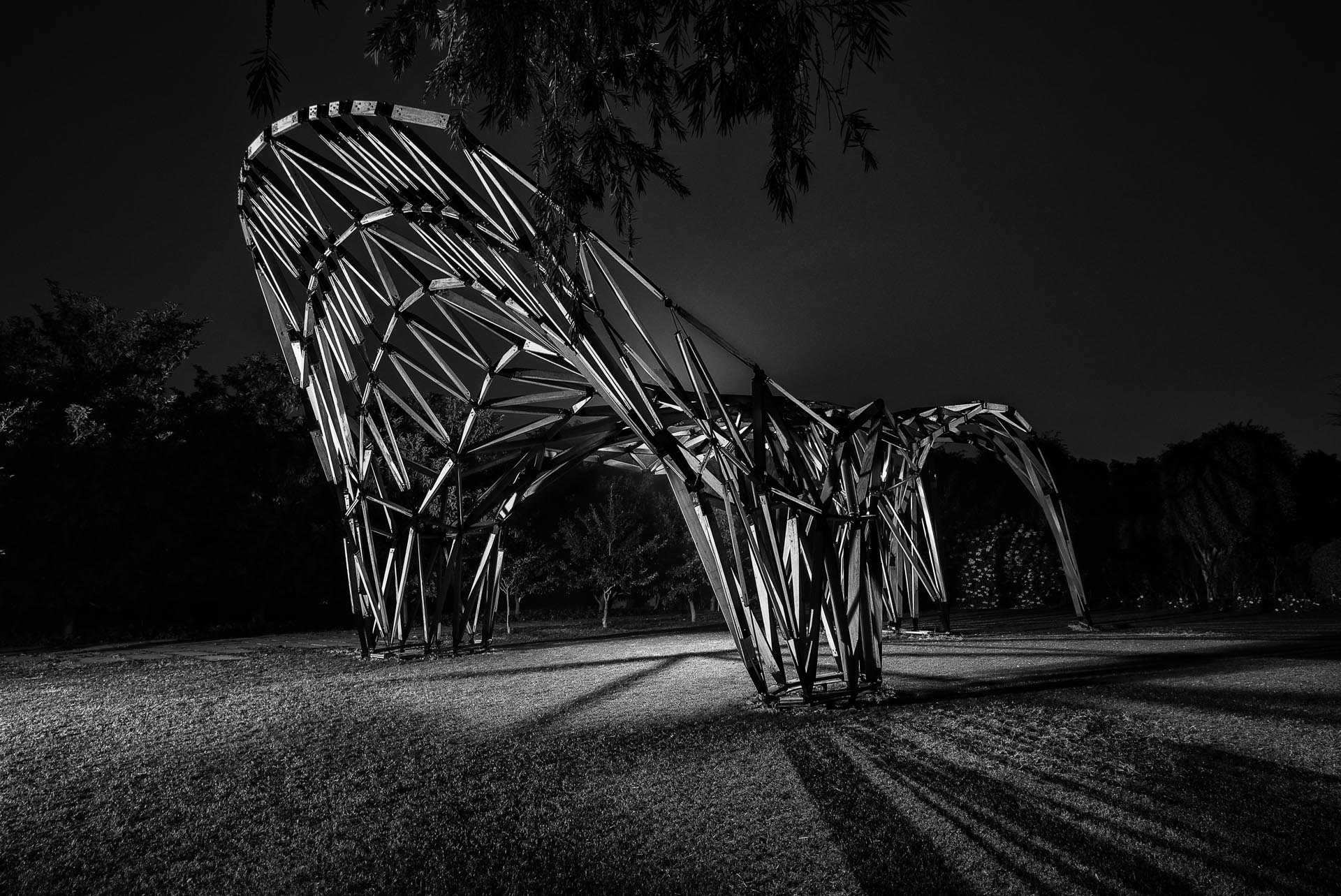
Plaisiophy

Pavilion for an Indian Wedding

Orproject was asked to design a wedding pavilion for a private client in India. Traditional Hindu weddings incorporate different rituals over the course of several days. During the main event of the wedding, the couple make seven vows to each other in Sanskrit led by a Hindu priest, and each vow is accompanied by a circumambulation around a holy fire. The event is attended by the couple’s family and friends, and in the Hindu belief also by the Vedic god of fire Agni. The weddings are commonly celebrated outdoors, with pavilion structures defining space without fully blocking the view or the elements.

It was our aim to create a pavilion that utilized contemporary design and construction methodologies while providing a semi-enclosed space to host the traditional ceremonies. The structure was designed as a veil-like geometry that opens up to welcome the guests of the wedding. It merges into an inner enclosed space and then comes down touching the ground to form the backdrop to the ceremonial stage.

Timber was chosen as the structural material because of its association with the fire god. The timber gridshell was constructed out of 841 beams that are connected at unique steel nodes. At each node the beams arrive at different angles in plan, while also having varying pitch and roll angles. This complex geometric information for the whole structure was fed into a custom computer script that generated the designs for all 305 nodes and generated cutting templates for all steel components. Those components were CNC-cut and could then precisely be slid into each other, welded together and assembles using low technology methods.

PROJECT CREDITS

Photography: Shovan Gandhi, Orproject

Plaisiophy by Orproject
Categories
Buildings

Busan Opera House

Orproject: Busan Opera House
Orproject-BusanOperaHouse-01
Orproject-BusanOperaHouse-02
Orproject-BusanOperaHouse-03
Orproject-BusanOperaHouse-04
Orproject-BusanOperaHouse-05
Orproject-BusanOperaHouse-06
Orproject-BusanOperaHouse-07
previous arrow
next arrow
Exit full screenEnter Full screen

Busan Opera House

A Frozen Piece Of Music

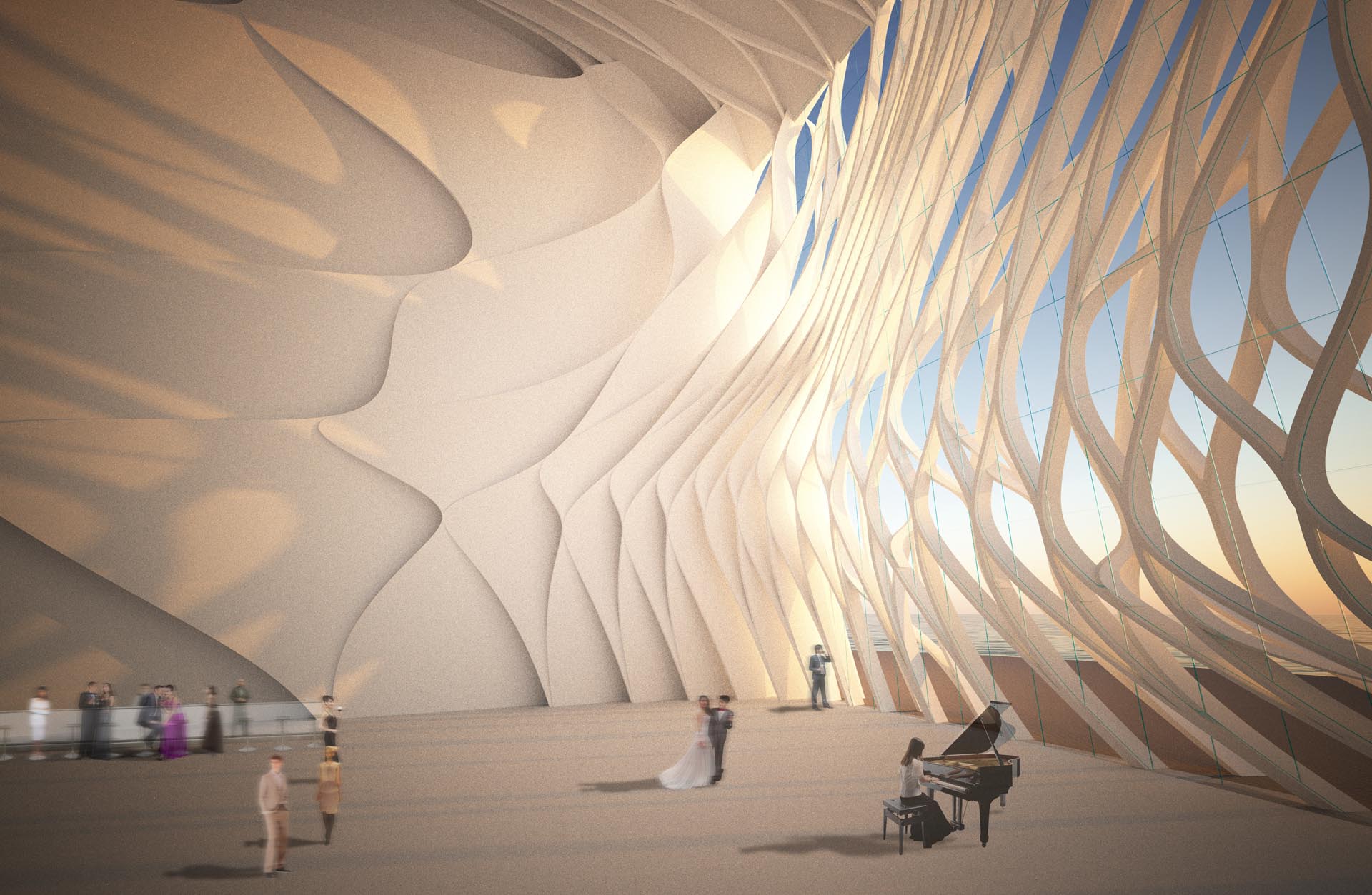
The design for the new Busan Opera House, is based on Klavierstück I, a composition for piano. It is based on a twelve tone row which is repeated and altered by the different voices, in order to create complex rhythmic patterns.

Busan Opera House becomes the physical manifestation of Klavierstück I, a frozen piece of music. The design for the opera house is based on a simple strip morphology instead of a twelve tone row, which creates the facade, structure and rhythm within itself, its repetition happening in space instead of time. Layers of the strips form the façade structure, and the shifting and alteration of these patterns results in the formation of complex architectural rhythms which are used to control the light, view and shading properties of the façade. The system has also been used for the design of our installation Anisotropia.

Shifting Tones

Klavierstück I uses a twelve tone row which starts with the lowest key of the piano. After its first cycle the row gets repeated, though shifted up by a halftone.However rather than translating up every tone by a halftone, only the lowest tone of the row is translated up by one octave. Like this the row remains the same, but its range has been shifted.

In the next repetition this shift continues, but the range now also gets reduced in its size: The
lowest tone gets translated up by one octave again, and the second lowest tone gets dropped out, so that only the remaining eleven tones of the row are played. Instead of the twelve tones the range now only covers eleven tones, and also its length is reduced accordingly.

The range of the twelve tone row continues to be reduced and shifted upwards until only one tone is left in each repetition of the original row. Then the range grows again, and still moving upwards goes through further modulations: The different voices of the piece are starting to separate, the size of the different parallel ranges starts to diverge, they move around each other, until finally they grow together again, still moving up and their range fading out with the highest key of the piano.

Piano Piece No.1 is based on a simple row of the twelve tones, but by shifting and translating its range of influence, complex and continuously evolving rhythmic patterns are generated and turned into a floating field of sound.

Structure And Light

The proposed façade structure becomes the physical manifestation of Klavierstück I. Instead of on a twelve tone row, it is based on a strip morphology made from curved steel sections that creates the facade, structure and rhythm within itself. The repetition of the lamella happens in space, instead of the repetition in time of the twelve tone row. Parallel layers of the strips form the façade structure, and the alteration of its patterns results in architectural rhythms which are used to control the light, view and shading properties of the façade.

The façade structure starts to flow from the sea, where its different layers are aligned and appear to be one. Then slowly the layers start to repeat at different intervals, resulting in a shift between them, the alignment breaks up, and a varied field of the façade rhythms begins to emerge.

The façade structure is altered in the length of its repetition, but also the orientation and the depth of the extrusions are manipulated in order to control the view and light, depending on the programmatic requirements on the inside of the building.

The flow of the façade layers is influenced by the programs which they enclose. As an effect of this the layers split up at certain points, and after forming a coherent system with the overlay of its rhythms, the individual layers separate and their individual patterns become visible.

Flow

The positioning of the façade walls has been developed according to a custom written flow simulation. The algorithm describes a flow that is influenced and altered by a set of deflectors, which each act according to the magnitude of their attraction and the area of their influence.

The distribution of the programmatic elements on the site is used as the deflector set that guides the flow of the rhythm lines which originate from the sea. On their way towards the city, the lines flow around the building elements such as the theatre and auditoriums, splitting up and being diverted by the deflectors.

In the musical composition the different voices converge again. For the building, the separate façade layers spread out towards the city, form the structure for a bridge, and then slowly fade out and disappear back into the ground.

Project Credits

Architects: Orproject
Structural Engineers: Arup Structural Engineering, London
Theatre Consultants: Arup Theatre Consulting, Hong Kong

Busan Opera House by Orproject
Categories
Explorations

Khoral

Khoral sculpture by Orproject
Khoral01
Khoral02
Khoral03
Khoral06
Khoral07
Khoral12
Khoral15
Khoral18
Khoral19
previous arrow
next arrow
Exit full screenEnter Full screen

Khoral

Algorithmic Simulation of Coral Growth

Khôral is a breathing, sculptural installation inspired by marine life that interacts with the visitors to draw their attention to the impending catastrophe awaiting our coral reefs. The installation is a composition of three paper sculptures, collectively assembled from flat laser-cut strips which bend to shape as they are serially connected to each other through adhesive flap joints. Equipped with a customised lighting system, the three forms breathe through their colours, blooming and fading in closely syncopated rhythms. The visitors are encouraged to move around the installation and peek into the interstitial spaces as they introspect, and perhaps re-think and re-imagine our relationship with ecology.

Project Credits

Project Partners: Christoph Klemmt, Rajat Sodhi
Project Architect: Ananya Kango
Project Team: Komal Sodhi, Aashna Barman, Kana Kitaoka
Fabrication: Laser Cutting Studio, Gurugram
Photographs: Suryan and Dang

Khoral by Orproject
Khoral by Orproject
Khoral by Orproject
Khoral by Orproject
Khoral by Orproject
Khoral by Orproject
Khoral by Orproject
Khoral by Orproject
Khoral by Orproject
Categories
Academic

Bryx

Orproject & Igor Pantic: Bryx
Orproject-Pantic-Bryx-01
Orproject-Pantic-Bryx-02
Orproject-Pantic-Bryx-06
Orproject-Pantic-Bryx-03
Orproject-Pantic-Bryx-05
Orproject-Pantic-Bryx-07
Orproject-Pantic-Bryx-04
previous arrow
next arrow
Exit full screenEnter Full screen

Bryx

Computational Growth Simulations

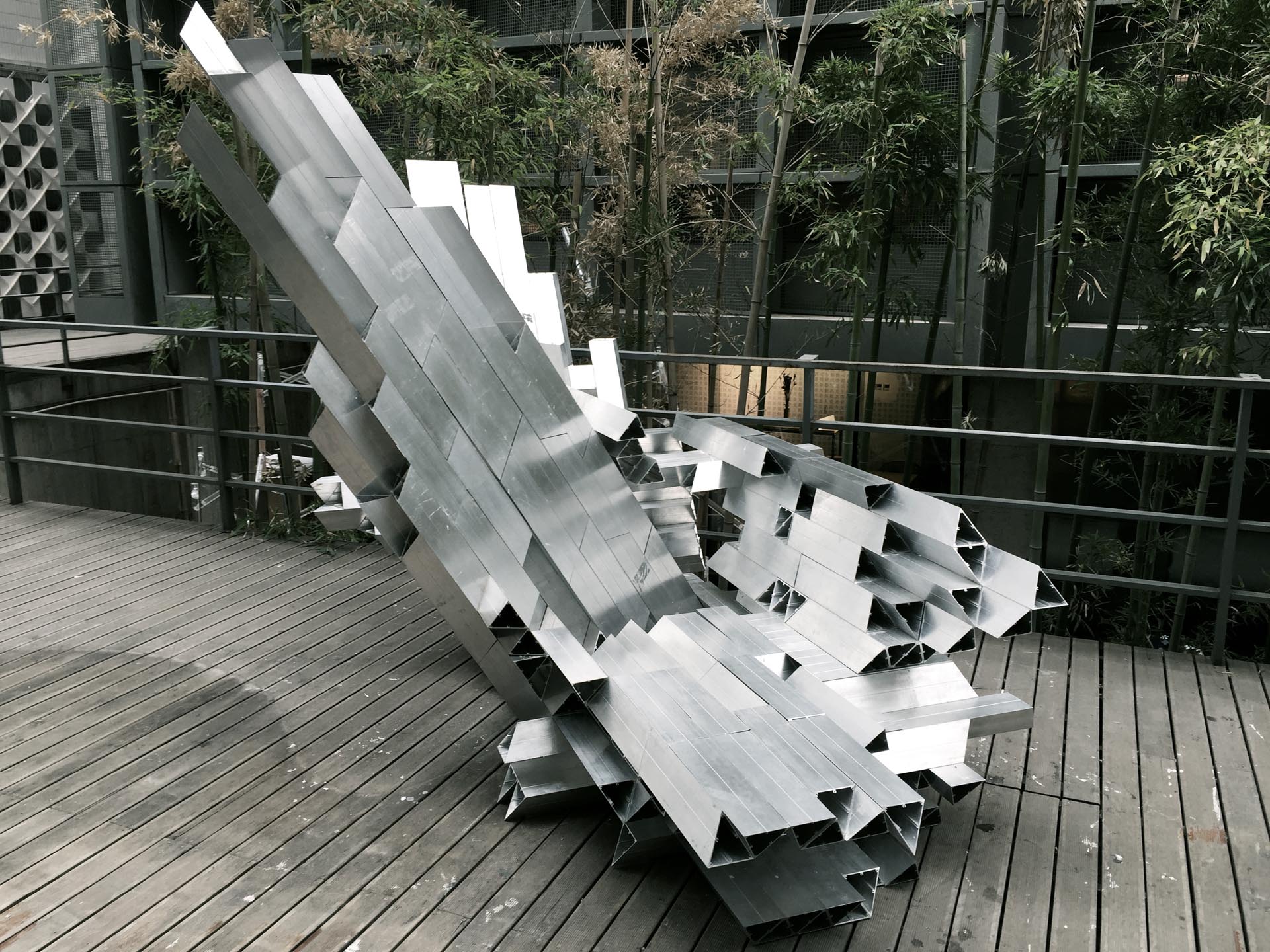
The installation Bryx was designed and constructed at the CAADRIA 2018 conference workshop, taught jointly by Christoph Klemmt and Igor Pantic. The students explored the possibilities of Cellular Growth Simulations that mimic the development of form based on processes of cell proliferation and cell differentiation. Similar to the way that organisms grow in nature, living architectural bodies are grown computationally. Those are programmed to react to different intercellular behaviours and external forces that are used to direct the growth towards a desirable outcome. An iteratively updating structural analysis was integrated into the algorithm to evaluate the load-bearing performance of the organisms.

Discretization

The geometries generated by the algorithms are initially free-form arrangements of cells in space. In order to include a logic for the construction, the cells are then positioned within 3-dimensional grids so that repetitive identical components can be placed along them. For the construction of the physical 1:1 prototype, custom shaped aluminum profiles were extruded and cut to form arrangements of 8 voxels per component. Those extrusions were then automatically placed by the algorithm along the grown geometry.

Project Credits

Workshop: CAADRIA 2018
Tutors: Christoph Klemmt, Igor Pantic
Teaching Assistant: Ning Tang
Students: Bing Zhao, Changdai Han, Guannan Jiang, Haoyang Shi, Lingyu Zhai, Jing Yuan, Mengyuan Li, Shaoji Wu, Xingyu Huang, Xinyun Liu, Yangshuhe Zhang, Yi Sheng, Yuan Tian, Yutong Chen, Yuxin Yang, Zhihua Zhu, Ziyou Xu
Photography: Jiao Yang

Bryx by Orproject and Igor Pantic
Categories
Academic

Styx

Orproject-Styx-01
Orproject-Styx-04
Orproject-Styx-03
Orproject-Styx-02
Orproject-Styx-05
Orproject-Styx-06
Orproject-Styx-08
previous arrow
next arrow
Exit full screenEnter Full screen

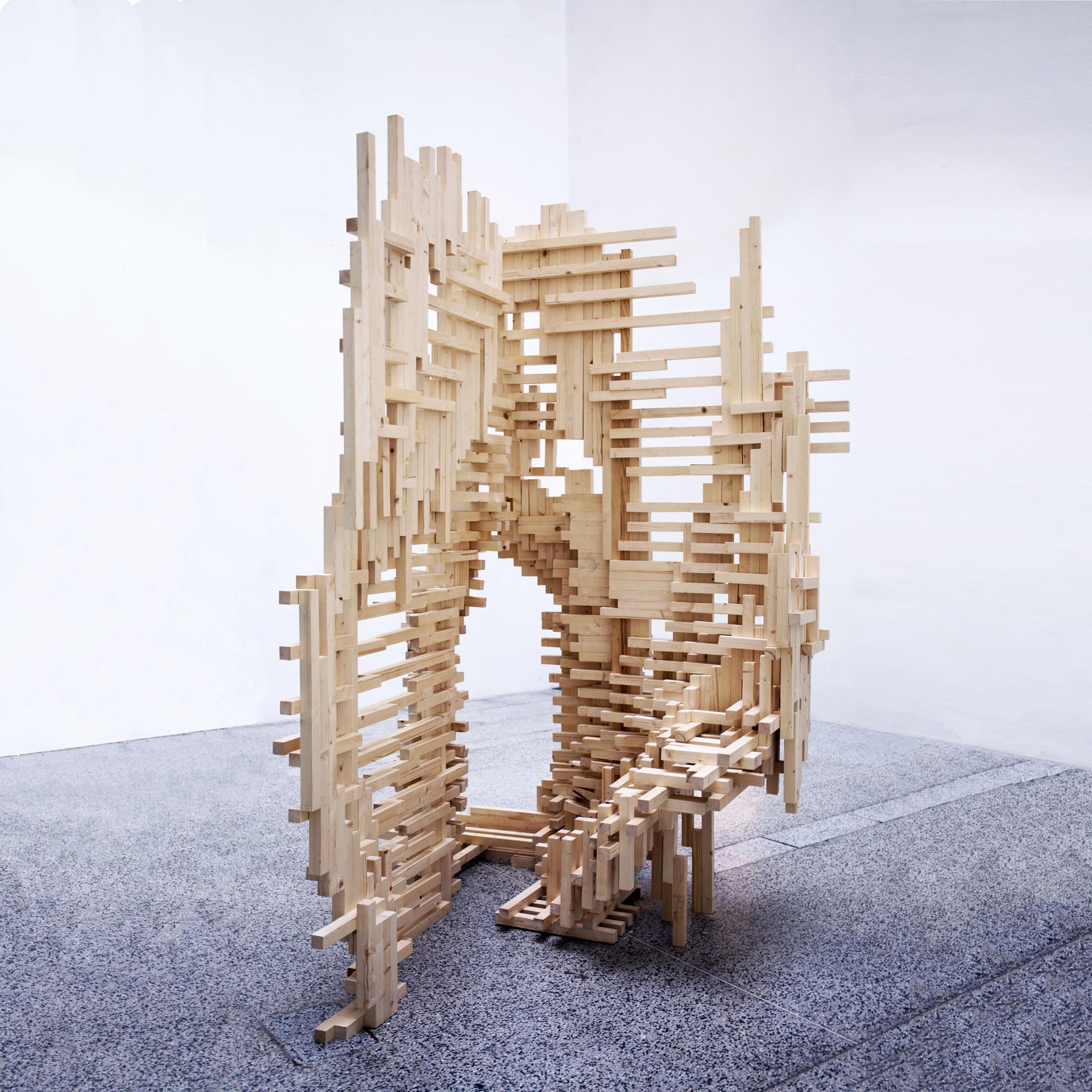
Styx

Computational Growth Simulations

The installation Styx was designed and constructed with the AA Visiting School at the Angewandte Vienna in 2018, taught jointly by Igor Pantic, Christoph Klemmt and Andrei Gheorghe. The students explored the possibilities of Cellular Growth Simulations that mimic the development of form based on processes of cell proliferation and cell differentiation. Similar to the way that organisms grow in nature, living architectural bodies are grown computationally. Those are programmed to react to different intercellular behaviours and external forces that are used to direct the growth towards a desirable outcome. An iteratively updating structural analysis was integrated into the algorithm to evaluate the load-bearing performance of the organisms.

Discretization

The geometries generated by the algorithms are initially free-form arrangements of cells in space. In order to include a logic for the construction, the cells are then positioned within 3-dimensional grids so that repetitive identical components can be placed along them. Further tools were used to control component densities and alignments. For the construction of the physical 1:1 prototype, timber beams of predefined lengths were used. The algorithm then automatically placed those components and calculated the required length of material required. The components were prefabricated and assembled within two days. Augmented Reality and Hololenses were used during the assembly to quickly determine the placement of the next component.

Project Credits

Workshop: Architectural Association Visiting School at the Angewandte Vienna
Year: 2018
Tutors: Igor Pantic, Christoph Klemmt, Andrei Gheorghe
Teaching Assistants: Alexandra Moisi, Nasim Nabavi, Saba Nabavi, Adam Sebestyen
Students: Diana Khotimskaya, Diana Marin, Tamara Salman, Nuraddin Kazimov, Irina Balan, Qinya Liu, Ada Gulyamdzhis, Iunia Borsa, Tianye Zhou, Xiye Mou, Guangrui Wang

Styx by Orproject - Christoph Klemmt, Igor Pantic, Andrei Gheorghe
Categories
Installations

Sahya

Orproject: Sahya
Orproject: Sahya
Orproject: Sahya
Orproject: Sahya
Orproject: Sahya
Orproject: Sahya
Orproject: Sahya
Orproject: Sahya
Orproject: Sahya
Orproject: Sahya
Orproject: Sahya
Orproject: Sahya
Orproject: Sahya
Orproject: Sahya
Orproject: Sahya
Orproject: Sahya
Orproject: Sahya
Orproject: Sahya
Orproject: Sahya
Orproject: Sahya
Orproject: Sahya
Orproject: Sahya
Orproject: Sahya
Orproject: Sahya
Orproject: Sahya
Orproject: Sahya
Orproject: Sahya
Orproject: Sahya
Orproject-Sayha-0944
Orproject-Sayha-1044
Orproject-Sayha-VB-001
Orproject-Sayha-VB-013
Orproject-Sayha-VB-021
Orproject-Sayha-VB-011
0165-S-CK04e-06
0165-CuttingSchedule-CK02
Orproject-Sayha-12512
Orproject-Sayha-WoodMould
Orproject-Sayha-VB-009
Orproject-Sayha-VB-017
Orproject-Sayha-1099
Orproject-Sayha-1105
previous arrow
next arrow
Exit full screenEnter Full screen

Sahya

Curvy Surfaces Flowing through Space

Orproject is interested in the economic construction of complex and double-curved geometries. The cost of molds often renders the use of double curved elements unsustainable. With Sahya, Orproject therefore explored the possibilities and variation which can be achieved by only utilizing one single mold.

Shading Pavilions

With the structural as well as the shading properties, Sahya is the initial prototype for pavilions for hot urban climates. The pavilion will protect from the sun and provide a comfortable outdoor environment. The variations in the wall translucencies are used to control the views and to generate continuously evolving shadow patterns, while the curved elements evoke associations of waves and cooling water.

Project Credits

Project Architects: Christoph Klemmt, Rajat Sodhi, Haseb Zada
Photography: Valerie Bennett, Orproject

Sahya by Orproject - Christoph Klemmt, Rajat Sodhi, Haseb Zada